Midday Sonoran desert sunlight slicing diagonally across a pale travertine courtyard stone bench under an adobe pergola, dividing full sun from deep shade where a wide-brimmed woven straw sun hat straddles the shadow boundary beside dark sunglasses and a folded pale linen sun wrap, with saguaro cacti and arid desert hills beyond.
Field Record 01 · Sonoran UV Natural suntanning depends on UV-driven p53 induction of POMC and α-MSH in skin; synthetic analogs like afamelanotide increase eumelanin independently of sunlight.

Tucson, 1980 — The melanocortin switchboard

Melanotans chased a desert tan: three prescription medicines, two online analogs.

In 1980, chemists built an enzyme-resistant α-MSH analog. Natural melanocortins share a conserved His-Phe-Arg-Trp core, yet each receptor requires its own motif—17 ACTH residues at MC2R, Phe-Arg-Trp at MC4R, four at MC1R/MC3R/MC5R. After 1989 Arizona cyclic synthesis, a 1996 clinical pilot observed erections and nausea alongside tanning, framing today's split between Scenesse, Vyleesi, Imcivree, and online Melanotan I and II.

The Split Trail

One molecular family, divided by receptor fences and regulatory testing

Pharmaceutical programs spent decades narrowing which melanocortin switches a peptide hits, how it is formulated, and which patients qualify. Online tanning markets operate outside clinical trials and manufacturing verification.

Prescription Medicines · Dry-Sky Slate Ledger

Three prescription melanocortin medicines

Online Tanning Analogs · Desert Ochre Ledger

Online Melanotan I & II: lab assays and hospital cases

Interactive Receptor Ledger

Why one four-amino-acid sequence crosses five organs

All five human melanocortin receptors are G protein-coupled receptors—cell-surface switches that relay chemical signals inside a cell—sharing 38% to 60% sequence identity. Every natural agonist cleaved from the precursor protein pro-opiomelanocortin (POMC) carries the conserved four-amino-acid sequence His-Phe-Arg-Trp. Below are the five switches paired with in vitro EC50 potency figures at human melanocortin receptors (the concentration producing half-maximal activation in nanomolar; lower numbers indicate higher potency) compiled by Yuan & Tao (2022).

MC1R

Skin & hair melanocytes

Shifts pigment synthesis toward photoprotective black eumelanin rather than red pheomelanin, which can generate free radicals under UV, and promotes UV-induced DNA nucleotide excision repair. Target of prescription afamelanotide (Scenesse), and also why MC4R agonist setmelanotide still produced skin hyperpigmentation in 67% of trial patients aged 6 and older on FDA's December 2024 label.

EC50 at human receptors (Yuan & Tao, 2022)

  • Native α-MSH1.01 nM
  • Afamelanotide (NDP-MSH)0.462 nM
  • Bremelanotide*0.095 nM
  • Setmelanotide5.8 nM
  • Melanotan II0.2 nM

MC2R

Adrenal cortex

Regulates adrenal cortical function and obeys strict selectivity: adrenocorticotropic hormone (ACTH) is the only endogenous ligand for MC2R, requiring the first 17 amino acids of ACTH. As Yang (2011) notes, substituting phenylalanine-7 with D-phenylalanine (D-Phe7) in ACTH decreases binding affinity and potency at MC2R, whereas substituting Phe7 with D-Phe in MSH increases affinity and potency at MC1R, MC3R, MC4R, and MC5R.

Selectivity boundary (Yang, 2011)

  • Endogenous agonistACTH only
  • α-, β-, γ-MSHNo binding
  • D-Phe7 in ACTHLower MC2R affinity

MC3R

Hypothalamus & limbic brain

One of two central neural melanocortin receptors; mouse knockout studies showed MC3R regulates feed efficiency in a role distinct from MC4R. In receptor assays compiled by Yuan & Tao (2022), Melanotan II activates human MC3R at subnanomolar potency (0.51 nM).

EC50 at human receptors (Yuan & Tao, 2022)

  • Native α-MSH1.04 nM
  • Afamelanotide (NDP-MSH)0.109 nM
  • Bremelanotide*2.4 nM
  • Setmelanotide5.3 nM
  • Melanotan II0.51 nM

MC4R

Hypothalamus & autonomic circuits

Regulates food intake and energy balance in mouse knockout studies alongside central pathways involved in sexual response. Targeted in rare obesity by prescription setmelanotide (Imcivree) and central to prescription bremelanotide (Vyleesi), whose June 2019 FDA label states that binding to MC1R and MC4R is most relevant at therapeutic levels and “The mechanism by which VYLEESI improves HSDD in women is unknown.” Melanotan II activates human MC4R at 0.05 nM in human-receptor assays and was associated with spontaneous erections, nausea, and yawning in a 1996 pilot human study.

EC50 at human receptors (Yuan & Tao, 2022)

  • Native α-MSH4.7 nM
  • Afamelanotide (NDP-MSH)0.075 nM
  • Bremelanotide*0.25 nM
  • Setmelanotide0.27 nM
  • Melanotan II0.05 nM

In vitro EC50 values at human melanocortin receptors are compiled from Table 3 of Yuan & Tao (2022) (primary assay set from Kievit et al., 2013; *bremelanotide from Durek et al., 2018, where MC5R was not reported). In vitro receptor potency does not measure brain penetration or clinical tissue distribution; read the full receptor biology ledger.

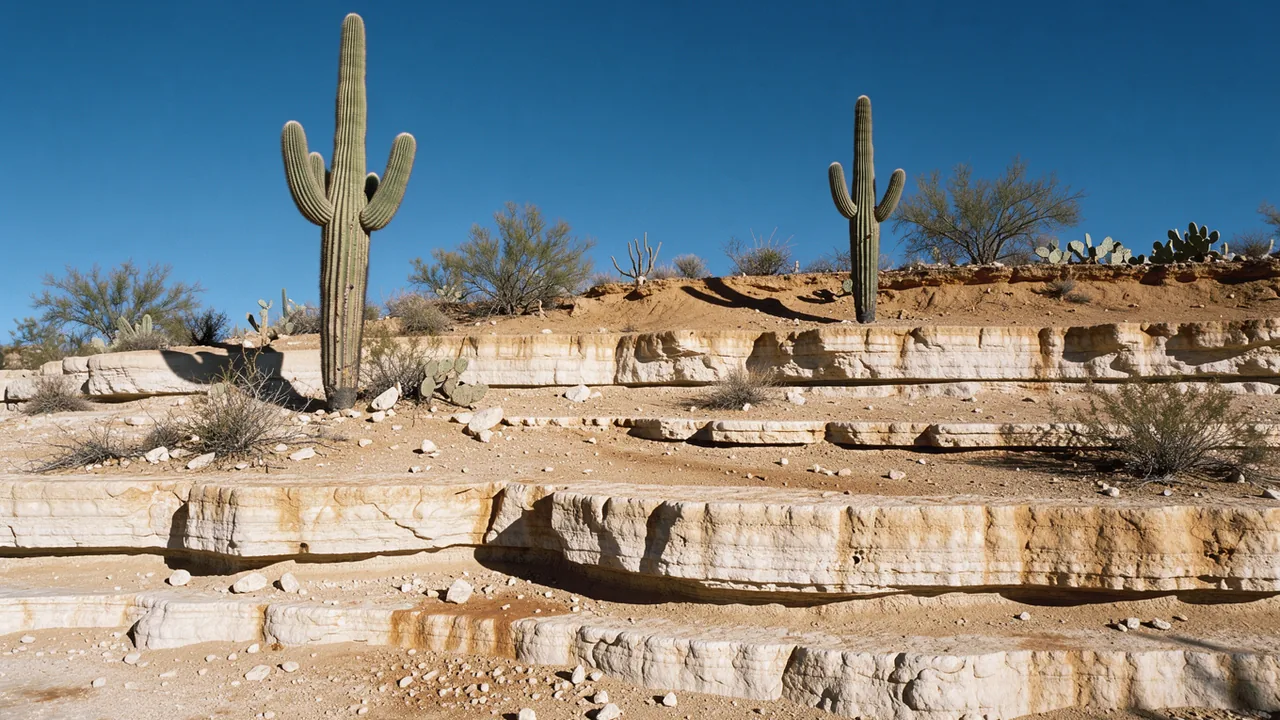
Midday Arizona sunlight raking across stratified pale travertine limestone ledges and weathered desert-ochre clay along a Sonoran ridge with two tall saguaro cacti casting sharp linear shadows under a cloudless blue sky.
Field Record 02 · Sonoran Ridge From 1980 synthesis in Tucson to 2026 Phase 3 hypothalamic obesity trials, four decades of peptide chemistry grew out of efforts to study how skin responds to intense desert ultraviolet light.

The Tucson Origin

How a sunless-tanning project collided with neurobiology

Native alpha-melanocyte-stimulating hormone darkens pigment cells, yet degrades rapidly in blood. In 1980, researchers reported [Nle4, D-Phe7]-α-MSH, a synthetic analog resistant to serum enzymes and 26 times as potent as native hormone in mouse melanoma adenylate cyclase assays. By 1991, a University of Arizona randomized, double-blind trial in 28 healthy white men wearing high-potency sunscreen showed the peptide darkened human skin without ultraviolet light.

University of Arizona chemists later synthesized a 23-membered cyclic peptide later named Melanotan II, which had 90 times the potency of native α-MSH in the lizard skin assay. In a 1996 University of Arizona pilot study of three normal male volunteers, investigators observed increased skin pigmentation in two subjects alongside mild nausea, stretching and yawning, and intermittent 1- to 5-hour spontaneous erections. A 1998 double-blind crossover trial in 10 men with psychogenic erectile dysfunction subsequently recorded clinically apparent erections in 8 of 10 men (mean tip rigidity above 80% for 38.0 minutes versus 3.0 minutes on placebo, p = 0.0045).

Read the full 1916–2026 origin dispatch

26×

Potency of [Nle4, D-Phe7]-α-MSH over native α-MSH in a 1980 mouse melanoma adenylate cyclase assay.

4.1%–5.9%

Unknown chemical impurities in Melanotan II vials from two of three online shops tested by LC-UV-MS/MS (Breindahl et al., 2015), with vial contents below labeled weight.

−16.5% vs +3.3%

52-week BMI change with setmelanotide vs placebo in 120 patients with acquired hypothalamic obesity (NEJM, July 9, 2026).

Field Dispatches

Eight source-linked reports across discovery, medicine, and regulation

Every chapter links claims directly to opened journal papers, FDA and EMA prescribing records, and dated national regulator advisories—keeping animal assays, single case reports, and randomized human trials clearly labeled.

Part I · Origin & Receptor Biology

  1. 01. The Tucson Switchboard Accident

    From 1916 melanocortin discovery and 1980 serum-stable synthesis to the 1991 JAMA UV-free tanning trial, the 1996 and 1998 Melanotan II clinical studies, and how one lab bench forked into clinical medicines and online products.

    Read dispatch
  2. 02. Five Receptors, One Four-Letter Key

    How UV activates p53 and POMC, why MC1R–MC5R overlap structurally, why MC2R requires ACTH's first 17 amino acids, EC50 potency at human receptors, and preclinical biased Gαq signaling.

    Read dispatch

Part II · Prescription Medicines (Dry-Sky Slate)

  1. 03. Afamelanotide (Scenesse)

    How Melanotan I became a clinician-placed bioresorbable implant for adult erythropoietic protoporphyria, what US CUV039 and EU CUV029 measured in pain-free sunlight hours, and what skin surveillance tracks.

    Read dossier
  2. 04. Bremelanotide (Vyleesi)

    One carboxyl group away from Melanotan II: RECONNECT Phase 3 desire and distress scores, the null secondary endpoint on satisfying sexual events, high nausea rates, blood-pressure limits, and daily-use hyperpigmentation.

    Read dossier
  3. 05. Setmelanotide (Imcivree)

    MC4R agonism across POMC, PCSK1, and LEPR deficiency, Bardet-Biedl syndrome, and the 2026 U.S. FDA label revision and EU EPAR update covering acquired hypothalamic obesity—plus persistent MC1R and mood side effects.

    Read dossier

Part III · Online Market, Case Reports & Regulators (Desert Ochre)

  1. 06. Online Melanotan I & II: Lab Assays

    Forum and social-media surveillance, UK MHRA and Australia TGA product classifications, LC-UV-MS/MS underfilling and impurity studies, heavy-metal and microbial contamination in seized peptides, and research-label advisories.

    Read dispatch
  2. 07. Case Reports, Moles & Causality

    Sympathomimetic toxidrome, rhabdomyolysis, refractory ischemic priapism, renal infarction, oral mucosal pigmentation, and an unvarnished audit of what melanoma case reports show—and cannot prove.

    Read dispatch
  3. 08. Regulatory Records From Six Jurisdictions

    Side-by-side dated quotations from the U.S. FDA and HHS (including the April 22 and October 30, 2026 compounding records), EMA, UK MHRA, Australia TGA, New Zealand Medsafe, and Denmark's Medicines Agency.

    Read ledger

Every figure, trial sample size, EC50 measurement, and regulatory quote across Melanotans traces back to 54 research papers, reviews, and official agency records.